
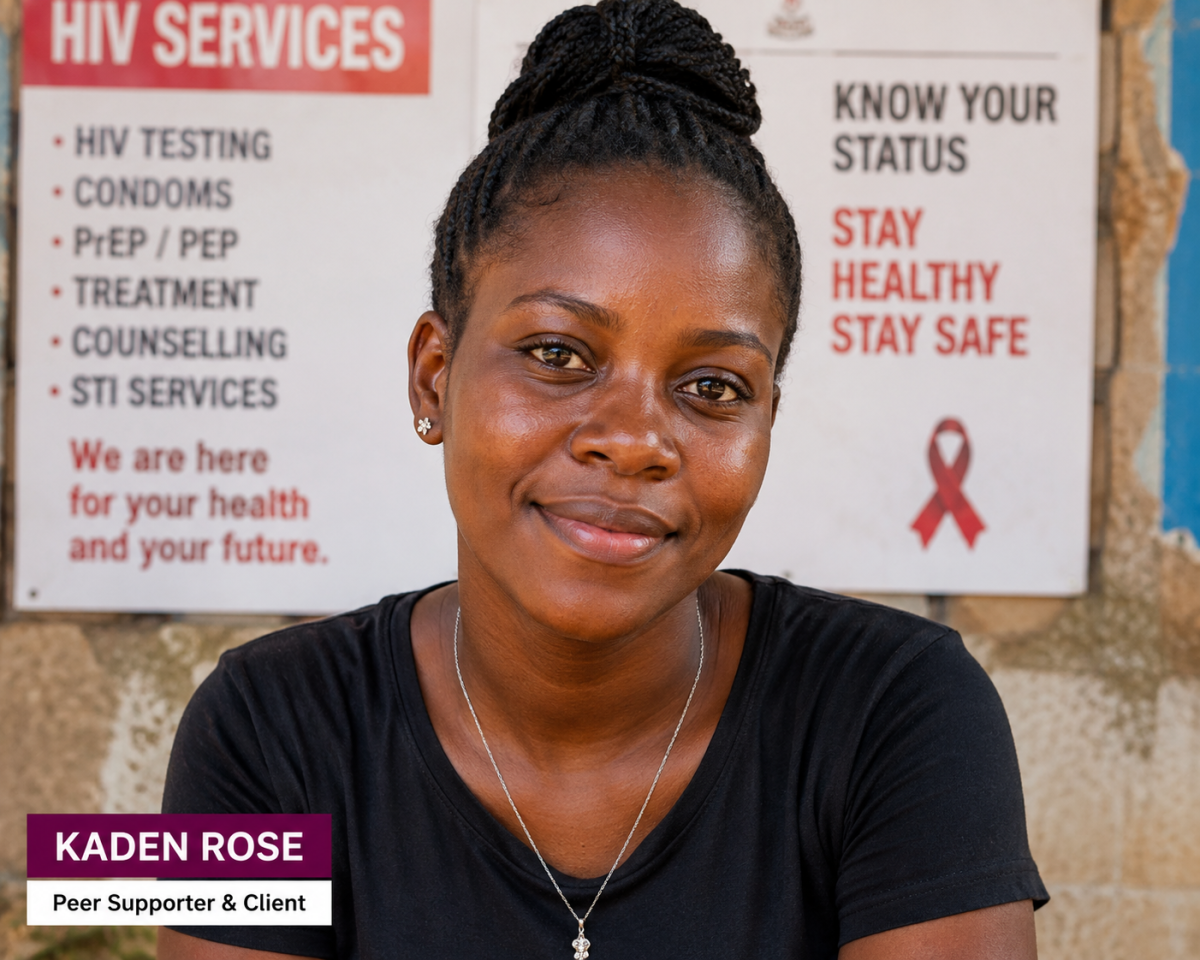
Sometimes, the difference between despair and hope begins with a simple conversation. For Kiden Rose, a young woman whose life was turned upside down by the 2016 conflict in South Sudan, that conversation came during a community outreach activity in Yei. Having lost her parents, struggled to survive and battled recurring illnesses, Kiden was searching for a way to make it through each day. She never imagined that meeting a peer educator would become a turning point in her life, helping her confront her fears about HIV, find the courage to begin treatment and rediscover hope for the future.
When Kiden lost her parents during the 2016 conflict, her world changed dramatically. Without parental support and with limited means of survival, meeting her basic needs became increasingly difficult. Faced with hunger, insecurity and the absence of a reliable source of income, she turned to sex work to support herself.
For some time, she managed to survive. But about a year later, her health began to deteriorate. Kiden started falling sick frequently. She sought treatment several times for malaria, typhoid and ulcers, but even after receiving treatment, the illnesses kept returning.
One day, during an outreach activity, Kiden met a peer educator supported through the Global Fund HIV prevention programme. The peer educator spoke with her, listened to her concerns and encouraged her to take an HIV test not because of an assumption about her status, but to help her know her status and make informed decisions about her health.
She became curious but also frightened. “What if I am HIV positive? Will I experience the same stigma and discrimination that many people living with HIV face here in Yei?” she wondered.
Despite her fear, Kiden summoned the courage to get tested during the outreach. The test result came HIV Positive.
For her, the news felt devastating. She lost hope and struggled emotionally to accept what she had just learned. At her lowest point, she even contemplated taking her own life.
The peer educators continued to visit and communicate with her, providing counselling, emotional support and treatment-adherence counselling. Importantly, some of the peer educators supporting Kiden were themselves living positively with HIV. They shared their own experiences and showed her through their lives that an HIV-positive diagnosis does not mean the end of life.
They encouraged her to begin treatment, adhere to her medication and take care of her health.
Kiden realized that the people standing beside her were also living with HIV and they were healthy, active and living normal lives. They worked, supported others, had hopes and dreams, and were not defined by their HIV status.
Her eyes opened to a different perspective about HIV and her future. She began to understand that knowing her status was not a death sentence; rather, it was an opportunity to take control of her health.
Kiden started adhering to her medication and has continued with treatment to date.
Today, her story represents more than an individual HIV treatment success. It demonstrates what can happen when HIV prevention, testing, treatment, counselling, peer support and stigma reduction are brought together as a comprehensive package for Key Populations.
Kiden’s experience demonstrates that reaching Key Populations with HIV services is not simply about distributing condoms or conducting HIV tests. A truly comprehensive HIV prevention package must address the whole person their health, emotional wellbeing, knowledge, dignity and ability to access continued care.
Kiden may not have sought HIV testing on her own because of fear, stigma or lack of information. The outreach programme created an opportunity for her to access testing and counselling in a setting closer to her community. The peer educator did more than encourage Kaden to test. The continued relationship provided trust, counselling and follow-up. For many Key Populations, peer educators are people they can speak to without fear of judgment.
