
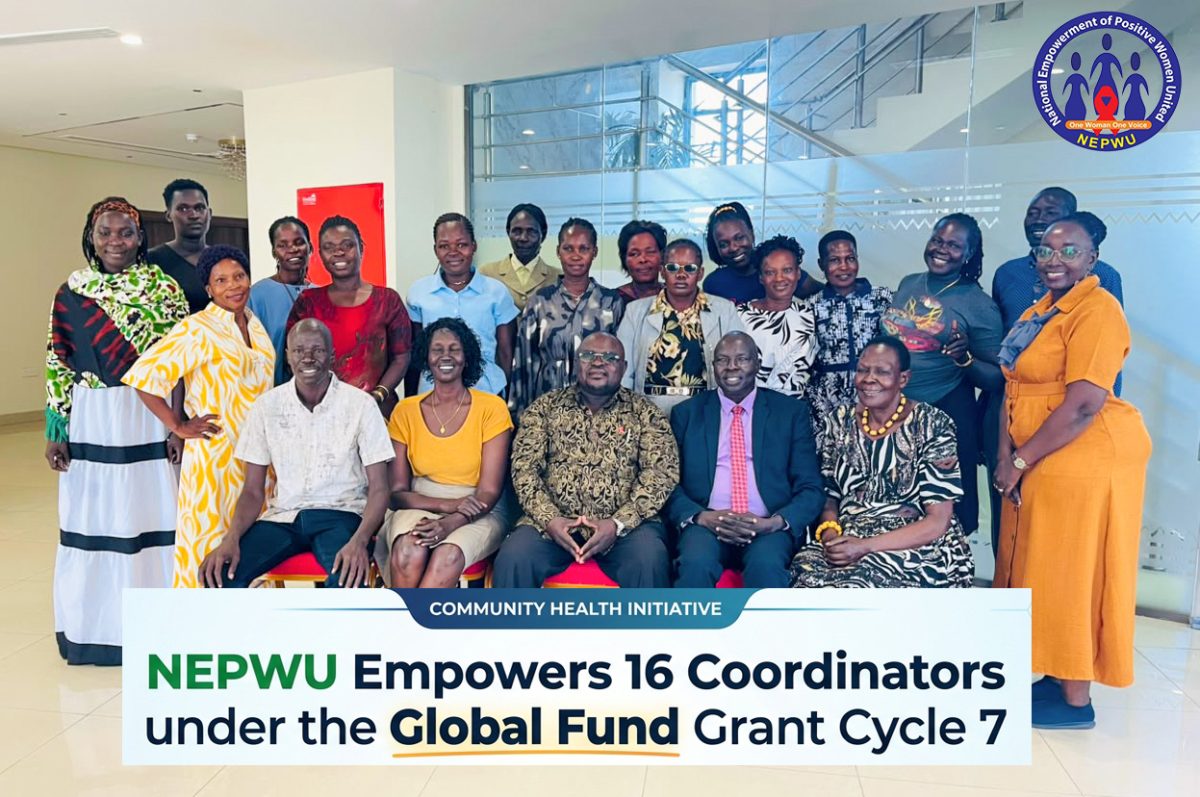
The National Empowerment of Positive Women United (NEPWU) has long stood at the forefront of the national HIV response, championing the rights of people living with HIV (PLHIV) and key populations. Building on a strong legacy of implementing community-based HIV prevention programs as a Sub-Sub Recipient (SSR) from 2016 to 2024, NEPWU has transitioned into a Sub-Recipient (SR) role under Grant Cycle 7, supported by UNDP for the period spanning January 1st 2025 to December 31, 2026.
This milestone encompasses expanded responsibilities, including the mentorship of the South Sudan Network of People Living with HIV/AIDS (SSNeP+) and the takeover of former PEPFAR Key Population (KP) sites.
Conducted in September 2026, The training was part of NEPWU’s 2026 programme implementation under the Global Fund’s Grant Cycle 7, with support from the United Nations Development Programme (UNDP). It aligned with NEPWU’s expanded responsibility as a Sub-Recipient (SR), including supporting community-level HIV prevention activities and strengthening coordination with the South Sudan Network of People Living with HIV (SSNeP+).
The training equipped the 16 coordinators with practical knowledge and skills in leadership, organizational management, communication, advocacy, resource mobilization, compliance, and donor reporting. Participants were also equipped with knowledge of organizational codes of conduct, conflict resolution, conflict of interest, Protection from Sexual Exploitation and Abuse (PSEA), and safety and security during outreach activities.
These competencies are essential for ensuring accountable leadership, responsible use of project resources, and effective delivery of services to female sex workers and other vulnerable communities.
The training has positively contributed to strengthening the capacity of state coordinators to plan, coordinate, supervise, and report on programme activities more effectively. Improved leadership and communication skills support better collaboration with peer educators, community mobilisers, health facilities, government institutions, and other implementing partners. Greater understanding of compliance requirements also promotes professionalism, accountability, ethical conduct, and safer outreach activities, helping to build trust among the communities served.
Beyond individual capacity development, the training contributes directly to improved project implementation. Better-equipped coordinators are more capable of supporting peer educators and community mobilisers, monitoring outreach activities, maintaining accurate records, preparing quality donor reports, and identifying implementation gaps for timely action.
Stronger documentation and reporting also improve the availability of reliable programme information for decision-making, accountability to donors, and demonstrating results. Furthermore, enhanced advocacy and resource mobilization skills can help coordinators build stronger state-level partnerships and identify opportunities to sustain community HIV prevention interventions.
Through this initiative, NEPWU continues to advance local ownership and strengthen the role of national civil society organizations in South Sudan’s HIV response. By investing in the leadership and technical capacity of its state coordinators, the organization is better positioned to deliver inclusive, accountable, and community-responsive services, reduce stigma and discrimination, and contribute to the national and global goal of ending AIDS as a public health threat by 2030.
