
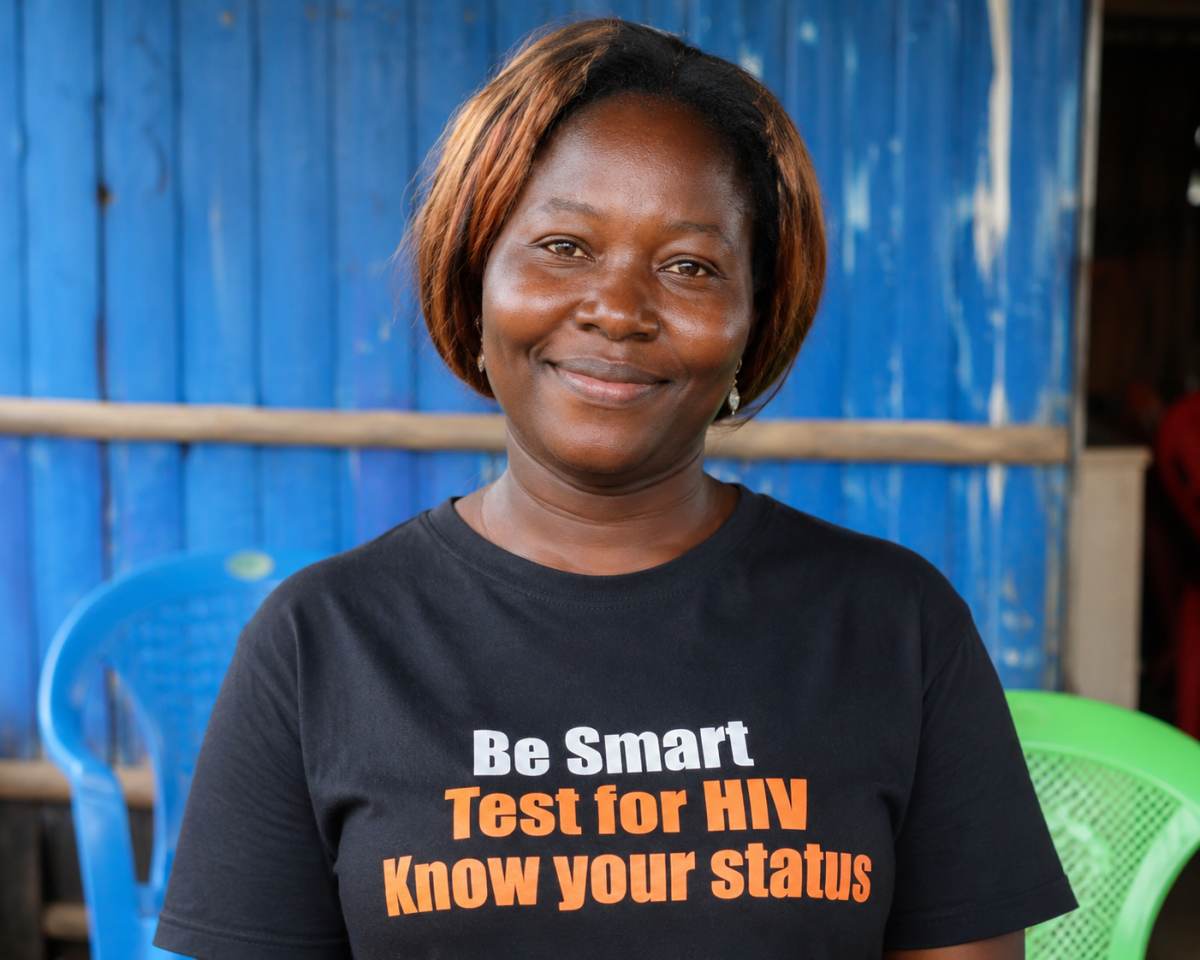
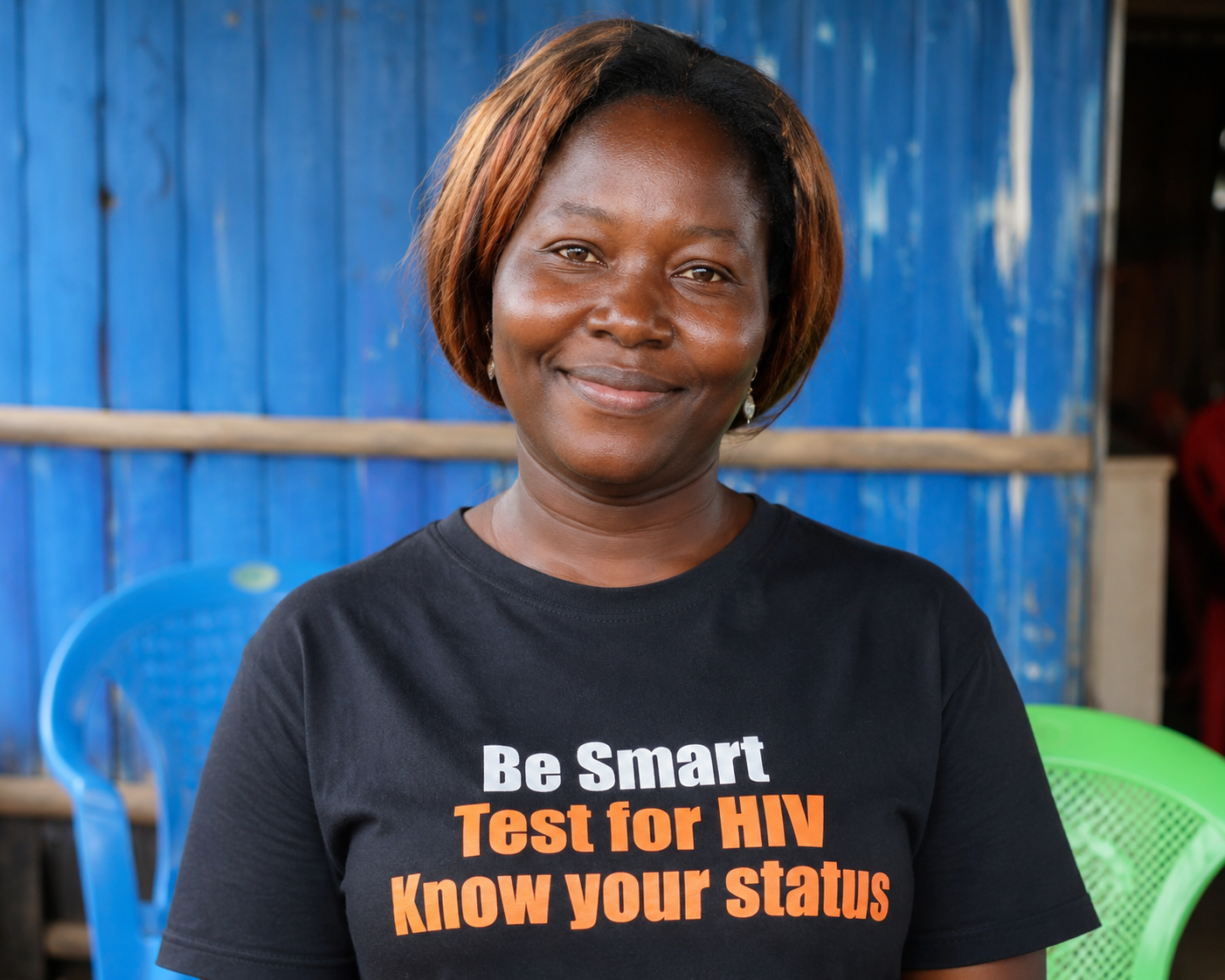
“Every time I saw the outreach team coming, I disappeared. I was convinced that if I got tested, the result would be positive. I would rather live with fear than face what I believed was my fate.”
For more than 6 years, Golda, a KPs from South Sudan, lived with a fear that silently controlled her life. Having watched many of her friends (FSWs) test positive for HIV, she became convinced that she, too, was infected. The fear of knowing her status was so overwhelming that she avoided every opportunity to get tested.
Whenever HIV outreach services arrived at her hotspot through the Global Fund-supported HIV program implemented by NEPWU, Golda would quietly leave before the team reached her. She avoided conversations about HIV testing, ignored health education sessions, and declined repeated offers for HIV screening for two years.
“I thought that if I didn’t test, I would have peace,” Golda recalls. “Seeing many of my friends diagnosed with HIV made me believe that I was next. I was afraid that knowing my status would destroy my life.”
Golda’s fear is not uncommon among women from key populations. Stigma, discrimination, misconceptions about HIV, and fear of a positive diagnosis often prevent people from accessing life-saving services. As a result, many delay testing and miss opportunities for early prevention or treatment.
Everything changed when a trained peer educator decided not to give up on her.
Instead of waiting for Golda to attend an outreach session, the peer educator visited her personally. As a fellow female sex worker who understood the realities, fears, and challenges of the profession, she approached Golda with empathy rather than judgment. She listened to her concerns, shared her own experiences, and explained the importance of knowing one’s HIV status as the first step toward making informed decisions about health and the future.
She emphasized that an HIV test is not something to fear it is a tool for empowerment. Whether the result is positive or negative, knowing one’s status opens the door to appropriate care, treatment, or prevention services.
“The way she spoke to me was different,” Golda says. “She didn’t force me. She understood my fears because she had walked the same journey. For the first time, I felt safe enough to say yes.”
Encouraged by the trust she had built with the peer educator, Golda finally agreed to be tested. When her result came negative, she was surprised because its contrary to what she thought as being positive, she became joyful, The relief she felt was overwhelming, but it was accompanied by a new sense of responsibility. The counseling she received after testing helped her understand that remaining HIV-negative required consistent prevention measures.
Immediately after receiving her results, Golda was initiated on Pre-Exposure Prophylaxis (PrEP) and received comprehensive prevention counseling, including the consistent and correct use of condoms. Today, she remains committed to taking PrEP as prescribed, uses condoms consistently, and regularly accesses HIV prevention services.
More importantly, Golda has become a strong advocate among other KPs. Drawing from her own experience, she encourages her peers not to let fear prevent them from knowing their HIV status.
“I wasted many years running away because of fear,” she says. “Now I know that testing gave me freedom, not fear. Knowing I am HIV negative motivated me to protect myself. I tell my friends that the earlier you know your status, the better choices you can make.”
Golda’s journey demonstrates the transformative power of peer-led, community-based HIV programming. Her story highlights how trusted peer educators can overcome fear, reduce stigma, and connect members of key populations to essential prevention services. Through personalized counseling, HIV testing, PrEP, and condom promotion, the Global Fund-supported program implemented by NEPWU is helping women like Golda take control of their health and remain HIV-free.
Golda’s story is a testament that the greatest barrier to HIV prevention is often not distance or lack of services, it is fear. With trusted peers, accurate information, and compassionate support, that fear can be replaced with confidence, informed choices, and hope for a healthier future.
