
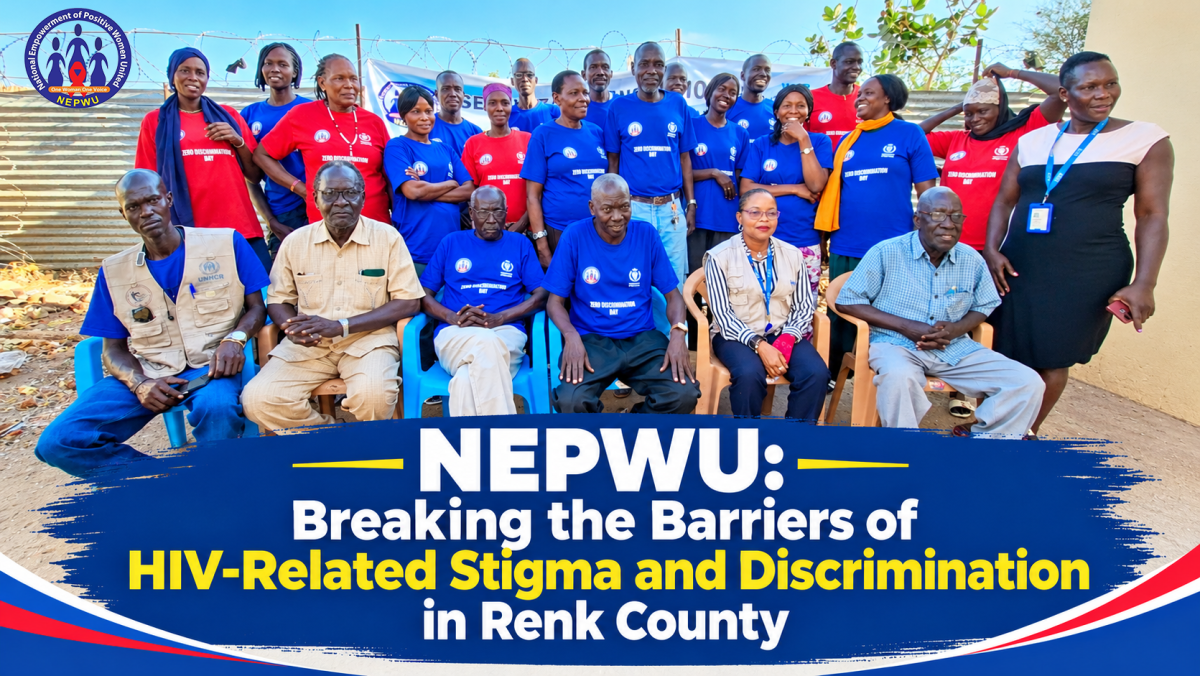
For many people living with HIV, the burden of the disease extends beyond managing their health; it is often compounded by stigma, discrimination and the fear of rejection by families and communities. A diagnosis that should lead to timely treatment and support can instead be accompanied by silence, isolation and exclusion, preventing people from seeking the services they need to live healthy and dignified lives. Despite advances in HIV prevention, treatment and care, stigma remains a significant barrier to ending the HIV epidemic.
Against this background, NEPWU conducted awareness workshop in Renk County, Upper Nile State in April 2026, to strengthen understanding of HIV-related stigma, challenge harmful misconceptions and promote a more supportive environment for people living with HIV, the awareness workshop brought together, Community Leaders, Health Workers, Teachers, PLHIV and Renk County local Government Official.
Through engagement of community leaders, teachers, healthcare workers, local government representatives and people living with HIV, the workshop provided an important platform for promoting shared responsibility in protecting human rights, challenging discriminatory attitudes and ensuring that no one is excluded from essential HIV services because of their status.
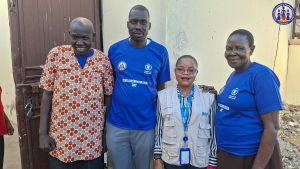
During the workshop, teachers recommended that HIV education be strengthened in schools to address misconceptions, promote accurate information and encourage learners to treat people living with HIV with respect and dignity. It was further recommended that schools provide safe and inclusive environments where learners affected by HIV would not face stigma, discrimination or exclusion.
Health workers indorsed that confidentiality be strictly maintained when providing HIV testing, treatment and other health services. The need for respectful, non-judgmental care was emphasized to ensure that people living with HIV could access health services without fear of discrimination, humiliation or disclosure of their HIV status without consent.
Office of Renk County Commissioner commended that efforts to address HIV-related stigma and discrimination will be strengthened through community awareness, collaboration with local leaders and the promotion of the rights of people living with HIV. The importance of involving government institutions and community structures in challenging discriminatory attitudes and supporting inclusive access to HIV services was also highlighted.
These recommendations reinforced the importance of collective action by schools, health facilities, government institutions and community leaders in creating a supportive environment for people living with HIV in Renk County.
A total of 30 participants attended the awareness workshop, including five teachers, six community leaders, five healthcare workers, four local government officials and ten people living with HIV. Through the participation of these diverse stakeholders, the importance of a coordinated, multispectral approach to addressing HIV-related stigma and discrimination was emphasized.
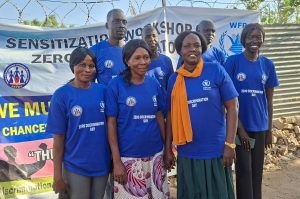
The workshop reinforced the importance of sustained awareness, community engagement and collaboration in breaking the barriers of HIV-related stigma and discrimination. Continued efforts were encouraged at community, school and healthcare levels to promote dignity, equality and access to HIV services for all.
